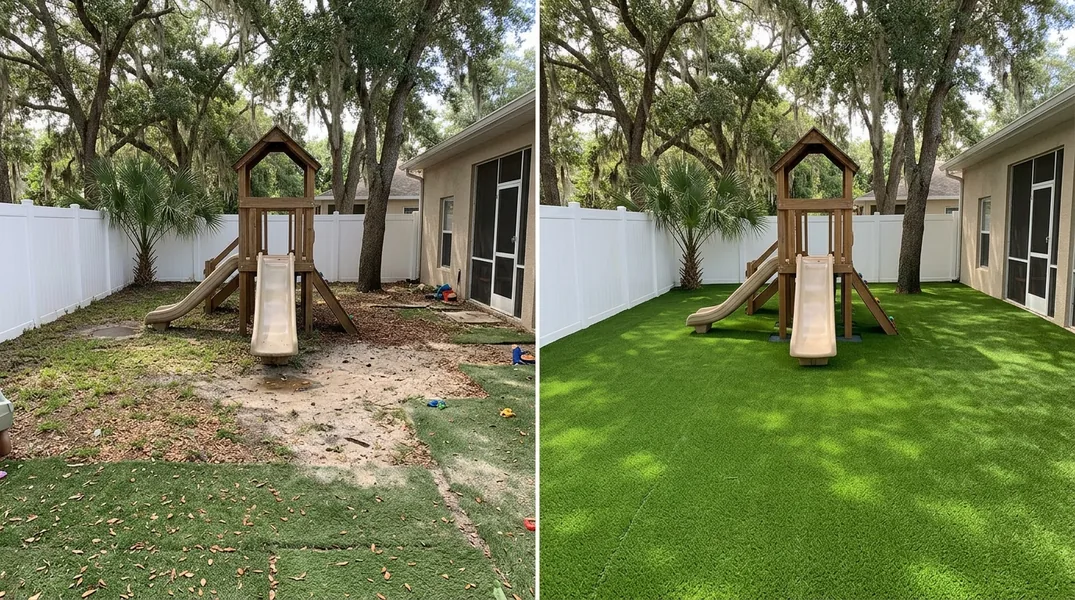
The Orlando Grass Dilemma: Why This Choice Matters
If you're a homeowner in Orlando, you've probably stood in your yard on a humid summer afternoon and wondered whether your lawn is worth the constant upkeep. The question of turf vs artificial grass isn't just about aesthetics anymore. It's about water conservation, maintenance time, and long-term value. Central Florida's hot, humid climate and frequent afternoon thunderstorms create unique challenges for any landscaping choice. Between traditional sod options like St. Augustine and Bahia grass, and modern artificial alternatives, homeowners today have more choices than ever before, but also more confusion about which is truly best.
The decision you make affects your water bill, your free time, and your property's curb appeal for years to come. Many Orlando residents are discovering that the old assumptions about lawn care no longer hold true. With drought concerns, rising water costs, and a growing environmental awareness, understanding the real pros and cons of each option is essential before you invest in your outdoor space.
Understanding St. Augustine Grass in Orlando's Climate
St. Augustine grass has been a Florida staple for generations, and for good reason. It thrives in our warm, coastal climate and handles the humidity that makes many other grasses struggle. This coarse-textured grass spreads through rhizomes and stolons, creating a dense, attractive lawn that feels soft underfoot. For homeowners who want a traditional grass look and don't mind regular maintenance, St. Augustine can deliver a lush, green yard during the growing season. It tolerates shade better than many alternatives, making it ideal for properties with mature trees.
However, St. Augustine comes with significant drawbacks for the modern homeowner. It requires consistent watering, especially during our dry seasons and heat waves. It's susceptible to chinch bugs, brown patch fungus, and other pests that thrive in Florida's warm, moist environment. Mowing is necessary every 7 to 10 days during peak growth, and you'll need regular fertilization and pest management to keep it looking its best. If you travel frequently or prefer to spend weekends relaxing rather than lawn maintenance, St. Augustine demands more of your time and attention than many homeowners realize.
Bahia Grass: The Low-Maintenance Native Option
Bahia grass represents a different philosophy in lawn care. This native Florida grass is incredibly hardy, drought tolerant, and requires far less fertilizer and chemical input than St. Augustine. It handles poor soil conditions, sandy terrain, and neglect with remarkable resilience. If you're interested in drought tolerant landscaping or xeriscaping principles, Bahia is a natural fit. Many environmental-minded homeowners choose it specifically because it reduces water consumption and chemical runoff into Florida's sensitive ecosystems. Bahia also resists most of the pests and diseases that plague St. Augustine, meaning fewer trips to the garden center and lower maintenance costs overall.
The trade-off is appearance and feel. Bahia has a coarser, less uniform texture than St. Augustine, and many homeowners find it less attractive. It also produces tall seed heads that require frequent mowing to maintain a neat appearance, and it doesn't handle shade well. If you have a smaller lot or want that manicured, traditional lawn look, Bahia may feel like a compromise you're not willing to make. Additionally, while it's tougher than St. Augustine, it still requires regular watering during dry spells to stay green and healthy.
Artificial Grass vs Real Grass: The Modern Alternative
The comparison between artificial grass vs real grass has shifted dramatically over the past decade. Modern artificial turf bears little resemblance to the plastic-looking carpet of the 1990s. Today's premium products feature realistic blade shapes, varied color palettes, and drainage systems that handle Florida's heavy rainfall. Residential Artificial Grass Installation has become a serious option for homeowners seeking to eliminate the lawn maintenance cycle entirely while maintaining a beautiful outdoor space year-round.
The benefits are substantial. Artificial turf requires no watering, no fertilizer, no pest control, and minimal mowing. It stays green through Florida's dry season and doesn't turn brown during heat waves. For families with children, it provides a clean, safe play surface. For pet owners considering Pet Turf & Dog Run Installation, artificial grass eliminates muddy paws and urine burn spots. The time savings alone justify the investment for many busy professionals and families. Over a 10 to 15 year lifespan, you'll spend far fewer hours on yard work and significantly less on water bills and lawn chemicals.
The primary concern homeowners raise is initial cost and the question of whether artificial turf feels authentic. Modern installations do feel remarkably natural underfoot, and the pricing has become increasingly competitive, especially when you factor in long-term savings. Unlike real grass, artificial turf doesn't degrade in quality over time if properly maintained. It won't develop bare patches, thin out, or require renovation every few years.
Water Conservation and Environmental Impact in Florida
Water consumption is perhaps the most compelling reason to reconsider traditional lawn options in Florida. St. Augustine and Bahia both require regular irrigation, especially during our dry seasons from October through May. A typical residential lawn can consume 20,000 to 40,000 gallons of water annually, depending on rainfall and maintenance practices. With Florida's groundwater resources under increasing pressure and water restrictions becoming more common, this consumption is no longer sustainable or economical for many homeowners. Xeriscaping and drought tolerant landscaping principles encourage reducing or eliminating turf altogether in favor of native plants, hardscaping, and alternatives like artificial grass.
Artificial turf eliminates irrigation entirely while maintaining a lush appearance. This isn't just about saving money on your water bill, though that's significant. It's about being a responsible steward of Florida's finite water resources. Many municipalities now offer rebates and incentives for homeowners who replace traditional lawns with artificial turf or native landscaping. If environmental impact matters to you, this is a meaningful way to reduce your household's ecological footprint without sacrificing curb appeal.
Cost and Maintenance: What to Expect Long-Term
When evaluating these three options, you need to think beyond the initial installation cost. St. Augustine and Bahia both require ongoing investment in water, fertilizer, pest control, equipment, and your personal time. Over 10 years, these costs accumulate significantly. Mowing equipment, fuel, maintenance supplies, and water usage add up to thousands of dollars. Professional lawn care services, if you choose to outsource maintenance, represent a substantial recurring expense. St. Augustine is particularly expensive to maintain due to its susceptibility to pests and diseases, which often require professional treatment.
Artificial turf has a higher upfront cost, but this needs to be weighed against decades of minimal maintenance. You'll rinse it occasionally, remove debris, and perhaps brush it annually to maintain blade appearance. There's no watering, no fertilizing, no pest control, and no mowing. For homeowners who value their time and want predictable, low costs, this trade-off makes financial sense. If you're interested in exploring artificial turf options for your property, Orlando Turf Installation can provide a detailed free estimate so you can compare actual costs with your current or projected lawn maintenance expenses. Call (407) 974-5418 to discuss your specific situation and get a clear picture of what investment makes sense for your home.
Making Your Decision: Which Option Is Right for Your Orlando Home?
There's no universally correct answer to the turf vs artificial grass question. Your choice depends on your priorities, budget, and lifestyle. If you love the feel of natural grass, have time for regular maintenance, and don't mind higher water bills, St. Augustine offers the traditional lawn experience. If you're committed to environmental stewardship and can accept a less refined appearance, Bahia grass is an excellent low-impact choice. If you want to eliminate lawn maintenance entirely, enjoy year-round green space, and are willing to invest upfront for long-term savings, artificial turf is the modern solution.
Many homeowners find that a hybrid approach works best. You might install artificial turf in high-traffic areas or around a pool, while maintaining St. Augustine in shaded zones where it thrives. Pool Surround Turf is an increasingly popular choice for families who want a maintenance-free, safe surface around their swimming area. Whatever you decide, take time to research options specific to your property's sun exposure, soil conditions, and your personal preferences. Orlando Turf Installation serves Orlando and surrounding areas with professional installation and honest guidance. If you're leaning toward artificial grass, we'd be happy to discuss your project and answer any questions you have.
Looking for a professional artificial grass installation company in Orlando? Orlando Turf Installation responds fast for all your artificial grass installation needs.
Get a Free Quote