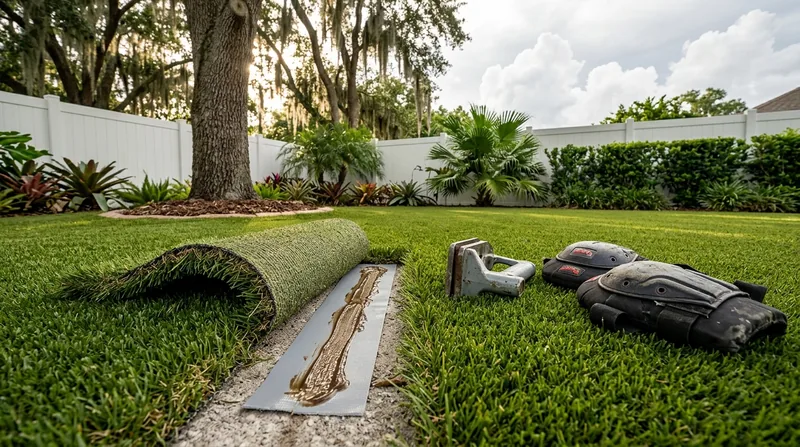




Turf Repair & Seam Repair in Orlando keeps your artificial grass installation looking whole and performing as designed after storms, ground settling, or heavy foot traffic. Central Florida's flat sugar-sand base, frequent summer thunderstorms, and the hard freeze-thaw cycles of occasional winter cold create conditions where seams separate, edges lift, and the sand foundation shifts beneath the turf. Fire ants build mounds that sink the surface; window reflections melt spots into the pile; and the traffic lanes through backyards and around screened pool cages flatten under repeated use. We cut out the damaged section, patch it with new turf, re-level the base, re-infill, and leave you with photos to document storm damage for your insurance claim if needed.
Why Turf Seams Fail in Orlando: Understanding the Local Landscape
Orlando's terrain is built on sand and sits in a region of high water tables and hundreds of lakes. The sugar-sand base under turf shifts with every heavy rain, every irrigation cycle, and every Florida summer thunderstorm that dumps two inches of water in thirty minutes. The natural settling of the soil, especially in newer developments like Horizon West and Lake Nona, works seams loose over the first year. Storm surge and wind-driven water can lift edges; the intense afternoon sun reflecting off pool cages and windows in Dr. Phillips, Winter Park, and Windermere can melt synthetic fibers; and the constant heat keeps infill loose and mobile, especially around high-traffic zones.
- Storm-lifted edges separate from the base after heavy rain or wind, especially on yards sloping toward lakes and retention ponds.
- Split seams crack open when the sand base shifts beneath the turf, common in yards with poor drainage or uneven compaction.
- Fire-ant mounds and sunken spots create divots that trap water and trip foot traffic, requiring base re-leveling and infill replacement.
- Melted spots appear where window reflections concentrate heat onto the turf surface, turning the synthetic fibers brittle and dark.
- Flattened traffic lanes develop along paths to the pool, gate, or sidewalk where foot traffic and the hot sand compress the pile.
Catching these problems early prevents them from spreading into larger sections and keeps the turf safe underfoot.
Key info: Central Florida's summer thunderstorms and the freeze-thaw of rare winter cold are the two biggest drivers of seam failure. A yard in Orlando that survived a hurricane season with no seam separation is lucky, and most yards benefit from a professional seam inspection after major weather events.
For more information on how weather affects artificial turf over time, visit the turf cleaning and pet odor treatment page, which covers the full lifecycle of turf maintenance in Central Florida.
How We Repair Seams and Edges: Our Step-by-Step Process
Seam and edge repair is not a patch-and-go operation. We assess the damage, identify what caused it, fix the root cause, and then install new turf so the repair is invisible and permanent. On a yard in Maitland with a lifted edge after a storm, we remove the damaged section, inspect the base for settling or poor compaction, re-level and compact the sand, install a new piece of turf with a properly sealed seam, and re-infill to match the surrounding yard. The work takes a few hours for a small repair and a day for larger sections.
- We inspect the damage on site and photograph the seam separation, melt spot, or lifted edge to understand what happened.
- We remove the damaged turf section carefully, pulling back the edges to expose the base and any debris.
- We excavate and re-level the sand base, checking for compaction and drainage problems that caused the original failure.
- We compact the base to the original depth and density, using a hand tamper or plate compactor depending on the area size.
- We cut and fit new turf from the same product line and lot to ensure color and pile height match perfectly.
- We seal the seams using a professional seam adhesive and reinforcing tape, pressing firmly to create a watertight bond.
- We re-infill with the original infill type and rate, and brush the pile to blend with the surrounding turf.
- We photograph the finished repair and provide you with documentation for your insurance file if the damage was storm-related.
The key to a lasting repair is fixing the base first. If we just glue a new piece of turf over a settling sand base, the seam will fail again within a year.
Real example: A home in Winter Park with a lifted edge along the pool deck after a hurricane had three inches of sand subsidence under the turf. We excavated the entire base section, re-compacted it to original depth, installed new turf with sealed seams, and re-infilled. Two years later, no movement.
For details on the full lifecycle of artificial turf maintenance and what to expect between repairs, visit our residential artificial grass installation page.
Repair Methods and Techniques: What Works Best
| Repair Type | Description | Best For |
|---|---|---|
| Seam Resealing | Remove old adhesive, clean the seam, apply new seam tape and urethane adhesive, press and cure. | Seams that have separated but turf is still intact on both sides. |
| Patch Replacement | Cut out damaged section, remove and re-compact base, install new turf piece with sealed seams, re-infill. | Melt spots, torn edges, lifted corners, and fire-ant mounds affecting an area up to 10 square feet. |
| Base Re-leveling | Excavate subsided sand, add compacted base material, re-tamp to original profile, reinstall turf and infill. | Large settled areas, sunken fire-ant mounds, and drainage problems causing standing water. |
| Edge Repair | Pull back lifted edge, inspect and re-compact base, reposition turf, re-secure with adhesive and stakes. | Storm-lifted edges, wind damage, and turf migration at yard borders and around hardscape. |
| Infill Replacement | Remove contaminated or compacted infill, clean the pile, add fresh infill, brush and level. | Flattened traffic lanes, infill migration, and pet odor in localized zones. |
The method we use depends on what caused the damage and how much of the yard is affected. A small melt spot gets a patch; a full edge lift needs base work and re-securing; a seam separation might be fixed with resealing alone if the base is solid.
Turf Repair & Seam Repair Cost in Orlando: What to Expect
The cost of turf repair and seam repair in Orlando depends on the size of the damaged area, the cause of the damage, and how much base work is needed. A small seam resealing might cost $350 to $500; a patch replacement covering 20 square feet could run $600 to $1,200; and a full edge repair with base re-leveling on a large yard might reach $1,500 to $3,000 or more. The biggest cost driver is whether the sand base needs excavation and re-compaction. A yard with poor drainage or significant settling will cost more to repair than one where the base is solid and only the turf needs replacement.
We always quote repair work on site after we see the damage and test the base. Storm damage may be partially or fully covered by homeowners insurance, and we provide detailed photos and documentation to help you file a claim. For a free on-site assessment and estimate, call us at (407) 974-5418 or visit our pricing page for a realistic range based on your yard size and condition.
Most homeowners in Orlando find that investing in a professional repair now prevents a much larger and costlier failure later. A resealed seam catches before it becomes a full separation; a small patch stops the damage from spreading into surrounding turf.
Turf Repair & Seam Repair Near Me: What to Look for When Hiring a Turf Installer in Orlando
Hiring the right turf repair company in Orlando means checking credentials, getting multiple estimates, and understanding what you are paying for. Ask any installer for a certificate of insurance naming general liability and workers compensation coverage; request a written specification that names the turf product, face weight, pile height, infill type and rate, and the base depth they will use; and ask for references and photos of finished repair work in your neighborhood. A good installer can show you repairs they have done in Winter Park, Windermere, or Dr. Phillips and explain why the repair lasted. Avoid companies that quote repair work over the phone without seeing the damage or that promise to fix a seam for $99 and then charge thousands when they discover base problems on site.
- Get written estimates from at least two local turf installers before committing to repair work.
- Ask each installer to explain what they will do to the base and why, not just what turf they will install.
- Request references from homeowners in your area who have had seams repaired or edges lifted after storms.
- Verify that the installer will use the same turf product and infill type as your original installation, or explain why a change is necessary.
- Confirm that the estimate includes all labor, materials, and re-infill, and that travel within Orlando and surrounding areas is included with no extra mileage fee.
A professional turf repair company will walk you through the process and answer your questions before the work starts.
For more guidance on choosing a turf installer and understanding the full scope of what professional turf work involves, contact us at our contact page to request a free estimate and speak with a field professional.
Turf Repair & Seam Repair in Orlando: Pricing Guide
| Service | Price | Details |
|---|---|---|
| Seam Resealing | Starting at $350 | Cleaning and re-adhering separated seams where turf is intact on both sides, includes seam tape and urethane adhesive, minor base inspection |
| Patch Replacement (up to 10 sq ft) | Starting at $600 | Cut-out and replacement of damaged turf section with base re-leveling, compaction, new turf piece with sealed seams, and re-infill to match |
| Edge Repair and Base Re-leveling | Starting at $800 | Storm-lifted edges or sunken areas requiring excavation, base re-compaction, turf repositioning, and re-securing with adhesive and proper infill |
| Large Repairs or Multiple Sections | On estimate | Repairs exceeding 10 square feet, full yard sections, or repairs combined with drainage work require on-site assessment before pricing |
| Travel | Included | All estimates and repair work include travel within Orlando and surrounding service areas with no separate call-out or mileage charge |
| Free Estimate | No charge | On-site damage assessment and written repair estimate within 24 hours, no obligation to book, call (407) 974-5418 anytime |
Indicative pricing, the exact cost depends on square footage, finish, and site access. Free personalized estimate within 24h at (407) 974-5418.


