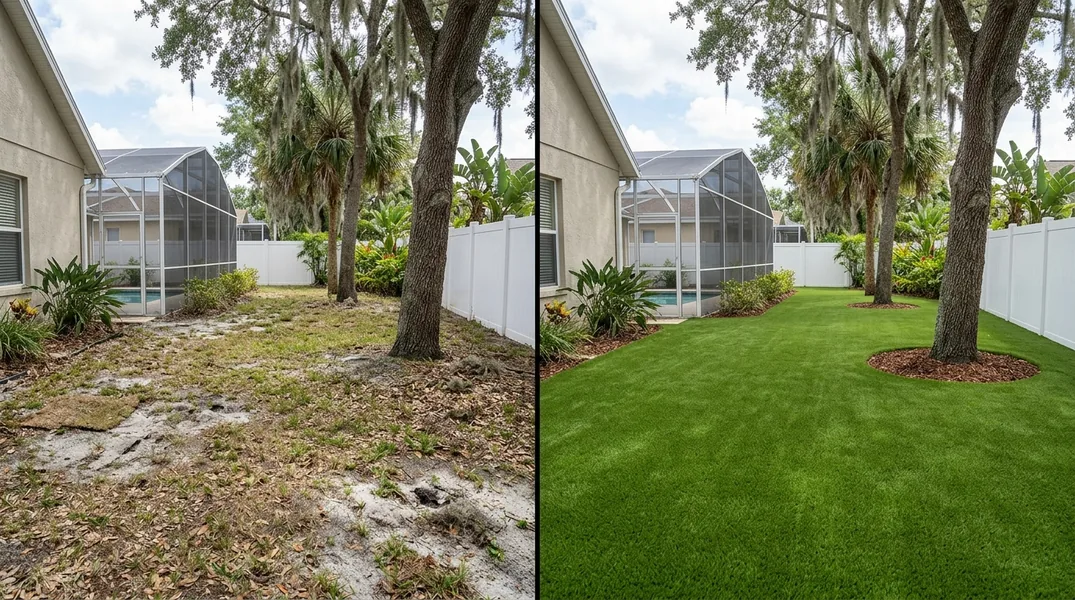
Does Artificial Grass Really Get Too Hot in Orlando?
If you're considering Residential Artificial Grass Installation in Orlando, you've probably heard the concern: does artificial turf get dangerously hot? It's a legitimate question, especially for homeowners in Florida's intense subtropical climate. The short answer is yes, artificial grass can reach higher surface temperatures than natural grass, but the difference is far less dramatic than many people assume, and there are proven solutions that work exceptionally well.
Traditional artificial turf can reach temperatures of 140 to 160 degrees Fahrenheit on a hot Orlando summer day, while natural grass typically stays cooler because it absorbs water and releases it through evapotranspiration. However, modern artificial grass technology has evolved significantly. Today's premium turf materials are engineered to reflect more heat and resist temperature buildup far better than the synthetic grass installations from a decade ago. For most residential applications, including Pool Surround Turf, the heat issue is manageable with the right approach and materials.
How Artificial Turf Heat Develops and Why Orlando Is Different
Understanding why artificial grass gets hot starts with basic physics. Natural grass stays cool because soil beneath it retains moisture and allows water to evaporate from the surface. Artificial turf, by contrast, sits on top of a base layer (usually crushed stone or recycled rubber) that doesn't hold water the same way. When direct sunlight hits the synthetic fibers, they absorb and retain heat rather than allowing it to dissipate. In Orlando, where summer temperatures regularly exceed 90 degrees and UV intensity is extreme, this effect is more pronounced than in cooler climates.
Humidity compounds the issue. Orlando's high humidity means that even when you water artificial grass to cool it down, the moisture doesn't evaporate as efficiently as it would in a dry climate. This is why homeowners in Florida often report that their artificial turf feels hotter than they expected. The good news is that this challenge is well understood by professional installers, and cooling solutions have become standard practice in quality residential installations across Central Florida.
Cooling Infill Technology: The Real Solution for Artificial Turf Heat
The most effective way to address artificial turf heat is through cooling infill. Traditional infill materials, like silica sand or basic crumb rubber, offer minimal heat reduction. Modern cooling infills, however, are specifically engineered to reflect sunlight and reduce surface temperature by 15 to 30 degrees Fahrenheit compared to standard infill. Common cooling options include cork-based infills, recycled rubber blends with reflective coatings, and specialized polymer compounds designed for heat dissipation. These materials work by reflecting more solar radiation away from the turf surface rather than absorbing it.
When you invest in Residential Artificial Grass Installation with cooling infill, you're not just solving a comfort problem, you're extending the lifespan of your turf. Excessive heat accelerates degradation of synthetic fibers, so cooling infill protects your investment long-term. The cost of upgrading to a premium cooling infill is modest compared to the overall installation expense, and for homeowners with children, pets, or anyone who plans to use their yard barefoot, it's an investment worth making. Orlando Turf Installation recommends cooling infill as standard for all residential projects in our service area.
Pool Surround Turf Near Me: Special Considerations for Water Features
Pool Surround Turf presents unique heat management challenges because water features amplify UV exposure and create additional thermal stress on synthetic materials. Wet artificial grass heats up differently than dry turf, and the constant cycle of wetting and drying can accelerate wear if the wrong materials are used. For pool cages and enclosed pool areas in Orlando, ventilation becomes critical. A poorly ventilated pool cage can trap heat and humidity, creating an environment where artificial grass temperatures spike even higher than in open yard installations.
The solution involves combining cooling infill with proper drainage design and, when possible, ensuring adequate air circulation around the pool area. Professional installers also recommend choosing turf products with UV stabilizers and antimicrobial properties, since the moist environment around pools encourages algae growth and can degrade lower-quality synthetic materials. If you're planning a pool surround installation, getting a professional assessment is essential. Contact Orlando Turf Installation at (407) 974-5418 to discuss your specific pool area layout and receive a customized cooling strategy for your project.
Practical Ways to Keep Your Artificial Grass Cooler Year-Round
Beyond choosing the right infill, several maintenance and design practices help keep artificial grass cooler. Regular watering, especially during peak heat hours in late afternoon, can reduce surface temperature by 10 to 20 degrees. Unlike natural grass, artificial turf won't absorb water through roots, but the moisture on the surface does provide evaporative cooling. This is particularly effective in humid climates like Orlando, where even modest moisture on the turf surface helps. Many homeowners find that a quick rinse with a hose in the evening keeps their yard comfortable for evening use.
Landscape design also plays a role. Strategic shade from trees, pergolas, or shade structures can reduce direct sunlight exposure and lower turf temperatures significantly. If you have a Pet Turf & Dog Run Installation, ensuring partial shade is especially important for your pet's comfort. Additionally, choosing a turf product with a lighter color or specialized heat-reflective backing can make a measurable difference. During installation, proper base preparation with materials that allow drainage and air circulation also contributes to cooler overall performance. These combined strategies work together to create a comfortable, durable artificial grass surface even in Florida's intense climate.
Residential Artificial Grass Installation Cost in Orlando: What to Budget for Cooling Features
When budgeting for Residential Artificial Grass Installation in Orlando, cooling infill and heat-management features represent an important line item. Standard artificial grass installation typically ranges from $8 to $15 per square foot depending on yard size and base conditions. Upgrading to premium cooling infill adds approximately $1 to $3 per square foot to your total project cost. For a typical 500-square-foot backyard, that's a difference of $500 to $1,500, which is well worth the investment for year-round comfort and turf longevity.
Your exact pricing depends on several factors: the current condition of your yard, whether you need extensive base preparation, the specific cooling infill product you choose, and whether your project includes special features like Pool Surround Turf or a Putting Green Installation. The best way to understand your actual investment is to request a free estimate from Orlando Turf Installation. Our team will evaluate your specific yard conditions, discuss cooling options, and provide transparent pricing so you can make an informed decision.
Looking for a professional artificial grass installation company in Orlando? Orlando Turf Installation responds fast for all your artificial grass installation needs.
Get a Free Quote