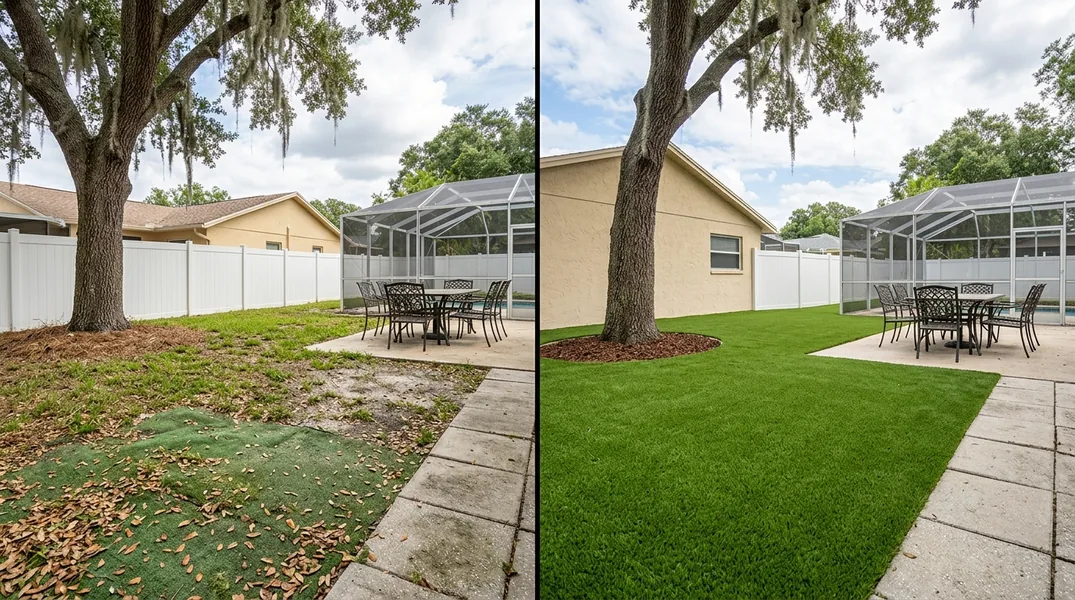
Why Sugar Sand Drainage Matters for Artificial Grass in Orlando
Orlando sits on a unique foundation of sugar sand, a fine-grained, highly permeable soil that presents both opportunities and challenges for Residential Artificial Grass Installation. While the natural permeability of sugar sand sounds ideal for drainage, the reality is more nuanced. Sugar sand drains so quickly that water can pass through without properly settling, and in areas with high water tables or near lakefront properties, improper drainage can lead to pooling, erosion, and an unstable base that shifts under foot traffic.
The key to successful Orlando artificial grass installation lies in understanding that you cannot simply lay turf directly on native sugar sand and expect years of trouble-free performance. Without a properly engineered drainage and base system, you risk settling, washout during heavy rains, and inadequate support for the turf fibers. This is especially critical for homeowners with lakefront lots, where water table fluctuations and seasonal flooding can compromise even a well-installed system. The investment in proper base preparation now prevents costly repairs and premature turf replacement later.
What to Put Under Artificial Grass: The Complete Base Preparation Strategy
Understanding what to put under artificial grass is the foundation of any successful installation. In Orlando's sugar sand environment, the base preparation process typically involves multiple layers, each serving a specific purpose. The first step is proper grading and compaction of the existing soil. A professional installer will evaluate the slope of your yard to ensure water flows away from structures, then compact the sugar sand to create a firm, stable surface. This compaction is critical because uncompacted sand will continue to settle under the weight of foot traffic and weather exposure.
After the soil is properly graded and compacted, the next layer is typically a geotextile fabric or weed barrier. This layer prevents weeds from pushing through the turf while allowing water to drain freely. Over this barrier, installers apply a base course material, usually recycled asphalt millings or crushed limestone, typically two to four inches thick. This material provides additional stability, further improves drainage, and creates a more forgiving surface that accommodates slight settling. Finally, an artificial grass underlay or shock pad is installed directly beneath the turf. This underlay provides cushioning, enhances drainage, and adds an extra layer of protection against the instability that sugar sand can sometimes exhibit. For Pet Turf & Dog Run Installation, an antimicrobial underlay is often recommended to prevent bacterial growth and odor issues.
Artificial Grass Underlay: Choosing the Right Material for Your Lot
The artificial grass underlay is perhaps the most important decision you'll make during base preparation, and it deserves careful consideration. There are several types of underlay available, each with distinct advantages depending on your specific situation. Crumb rubber underlays, made from recycled tire material, offer excellent shock absorption and are popular for high-traffic areas. Foam-based underlays provide good cushioning with a lighter feel underfoot and are often preferred for residential applications where comfort is a priority. Geotextile underlays are thinner and more economical, focusing primarily on drainage and weed prevention rather than cushioning.
For Orlando homeowners with lakefront properties or homes in flood-prone areas, the choice of underlay becomes even more critical. A high-quality, water-permeable underlay that allows rapid drainage is essential. Some premium underlays are specifically engineered for high-moisture environments and include antimicrobial treatments to prevent mold and mildew growth. The thickness of your underlay also matters. A thicker underlay (typically half-inch to three-quarters of an inch) provides better shock absorption and durability but may increase overall pricing. A professional assessment of your specific lot conditions, including soil composition, water table depth, and intended use, will determine the ideal underlay choice for your home.
Turf Base Prep for Lakefront and High-Water-Table Properties
Lakefront and waterfront properties in the Orlando area face unique challenges when installing artificial grass. These lots typically have higher water tables, experience seasonal flooding, and may have soil that remains saturated for extended periods. Standard base preparation techniques are insufficient for these environments. Professional installers must conduct a thorough site assessment, including soil testing and water table evaluation, before recommending a base prep strategy. In many cases, a more robust system involving French drains, perforated drainage pipes, or swales may be necessary to redirect water away from the turf installation.
For lakefront properties, the base preparation process often begins with improving grading to create positive drainage away from the home and turf area. Installing a perimeter drain system can help manage water that would otherwise pool under or around the artificial grass. The base material layer may need to be thicker than standard installations, sometimes reaching six inches or more, to provide adequate elevation and drainage capacity. Additionally, choosing an underlay specifically rated for wet environments is crucial. These specialized underlays maintain their structural integrity even when saturated and include features that prevent water from pooling directly beneath the turf. If you own a lakefront property and are considering artificial grass installation, a free estimate from a local specialist who understands Orlando's unique drainage challenges is essential to avoid costly mistakes.
Artificial Grass Drainage Systems: Beyond the Basic Base
While a properly prepared base handles routine drainage, comprehensive artificial grass drainage systems go further to manage heavy rainfall and standing water issues. In Orlando, where afternoon thunderstorms are common during summer months, a well-designed drainage system prevents water from overwhelming your turf installation. Subsurface drainage systems, including French drains or perforated drain lines installed beneath the base material, direct water away from the turf area and toward storm drains, retention areas, or natural drainage paths on your property. These systems are particularly valuable for properties with poor natural drainage or those in low-lying areas prone to ponding.
Surface-level drainage considerations are equally important. The slope and grading of your yard should direct water away from structures and toward appropriate drainage areas. A professional installer will ensure that water flows off the artificial grass surface rather than pooling on top. For Pool Surround Turf installations, proper drainage becomes even more critical since standing water around pools creates safety hazards and accelerates turf degradation. Modern artificial grass products are designed to be permeable, allowing water to drain through the turf fibers themselves, but this only works effectively if the layers beneath provide adequate drainage pathways. When these elements work together, your artificial grass will remain dry, stable, and attractive through Orlando's intense weather patterns.
Professional Turf Base Prep Near Me: When to Call Orlando Turf Installation
While some homeowners may be tempted to handle base preparation themselves, the complexity of proper drainage and foundation work in sugar sand soil makes professional installation the smart choice. Orlando Turf Installation has extensive experience with the specific soil and drainage challenges that Orlando homeowners face. Our team understands how sugar sand behaves, how water tables affect different neighborhoods, and which base preparation techniques deliver lasting results. We've installed artificial grass on everything from standard residential lots to challenging lakefront properties, and we know what works in this unique environment.
The investment in professional base preparation pays dividends in longevity and performance. Improper installation can result in settling, shifting, drainage problems, and premature turf replacement, ultimately costing far more than doing it right the first time. If you're considering artificial grass for your Orlando home and want expert guidance on drainage, underlay selection, and base preparation tailored to your specific lot conditions, contact Orlando Turf Installation at (407) 974-5418 or request a free estimate today. We'll assess your property, explain the options, and recommend the best base preparation strategy for your budget and goals.
Looking for a professional artificial grass installation company in Orlando? Orlando Turf Installation responds fast for all your artificial grass installation needs.
Get a Free Quote